
Imagine two public toilets. Imagine two public restrooms. One trailhead is situated in a rural area which is surrounded by open space.
Both of them provide the same fundamental service, however, designing them as identical buildings could overlook the differences in how these sites work.
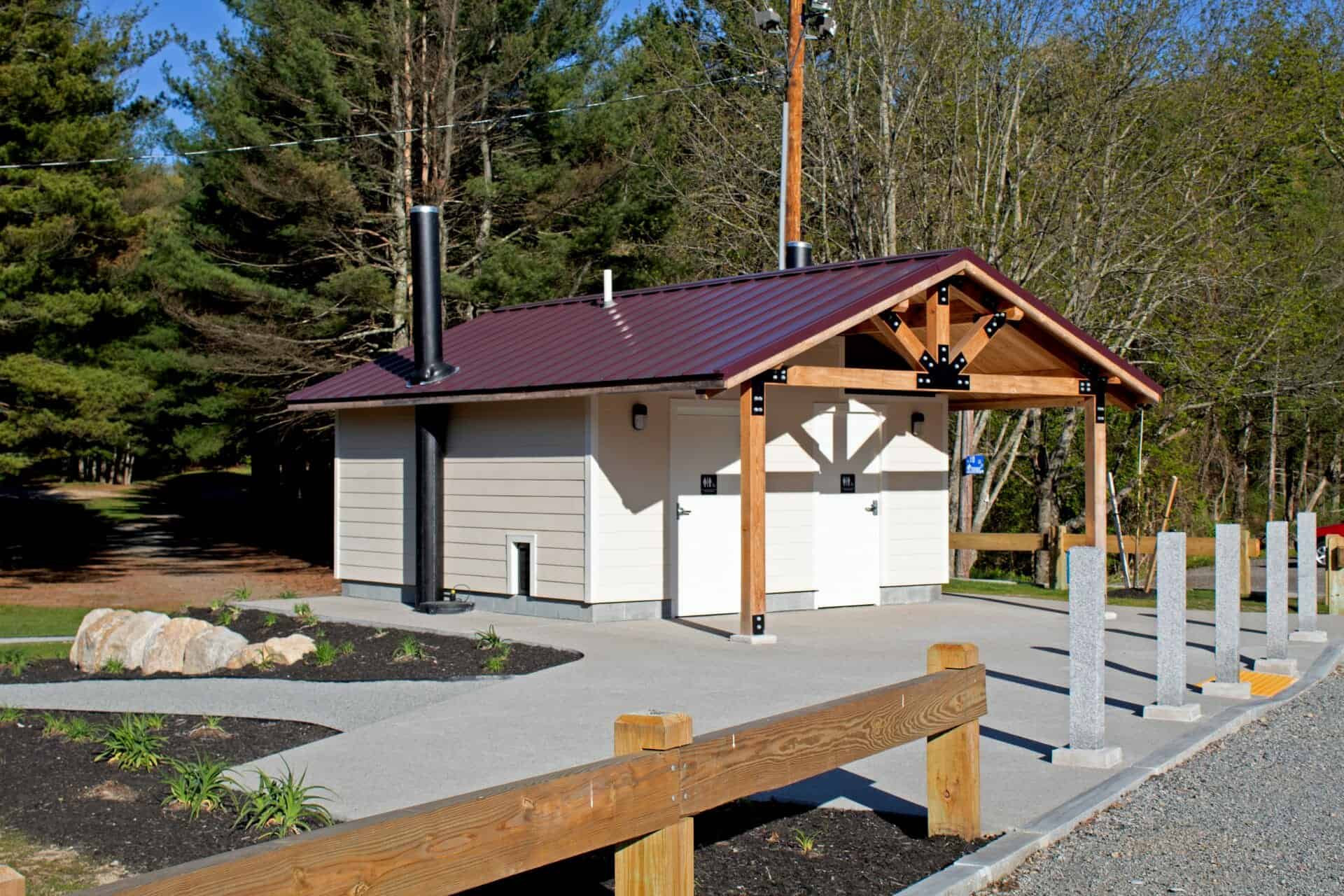
Image credit: romtec.com
The choice of the site is crucial to creating good public restrooms. Who will use the facility? What is the maximum number of people allowed to enter at the same time? What amenities are there? How far are visitors required to walk? What kind of architecture is surrounding the building?
The answers to these questions will shape any decision that is made.
Begin by watching how people navigate through the site.
The location of toilets should not be viewed separately from the rest and design of the park. Visitors may arrive in large numbers to a sports complex to watch events or games. It is vital that a bathroom serving the playground is located in an accessible location for families, and be able to fit into the traffic flow. In a downtown area it is possible to fit sidewalk restrooms into an area smaller than the nearby streetscape elements.
The structure is only one aspect of the total experience. Location is influenced by surroundings accessibility, walkways, and other activities.
Remote sites can cause a new issue
Make the project more remote from existing roads and infrastructure. A scenic view, a camping area, trailhead, or remote recreation area may not have a practical connection to conventional sewer service. In appropriate applications, vault toilets provide an alternative that allows restroom facilities to serve locations where traditional plumbing infrastructure may be difficult or impractical.
This alters the design discussion. Instead of choosing a structure first, design teams are able to evaluate the site’s conditions and decide which bathroom system best fits the space.
Capacity should reflect actual use
The types of people who visit a quiet neighborhood park and regional sports facilities are different. In peak times, demand is crucial. Peak demand is critical.
Before construction, owners should be aware of the usage for restrooms, including their size, layout, and maintenance requirements.
If you are a company looking at the possibility of prefabricated parks restrooms Flexibility is useful since the building could be designed to meet the project’s requirements instead of making the location fit an established model.
The Architecture Conversation is Still Relevant to Us
The appearance of a restroom is crucial, however it shouldn’t be ignored since the function is more crucial. The bathroom is visible element of the public landscape. The roof forms walls, sidings, colors fixtures and masonry can be used to relate it to adjacent pavilions, concessions and natural surroundings, or as a design theme for the community.
Romtec’s customized approach permits project teams to incorporate different materials, colors, shapes, and exterior treatments instead of being restricted to one standard appearance.
Design for the Environment It’s not just about the function.
Romtec works with park owners and contractors in order to supply and install restrooms as well as other public buildings. Its expertise is in documents for building construction, code concerns, ADA issues, engineering selection of the right components and construction in the United States.
The primary starting point, however, is surprisingly straightforward. Start by deciding what type of bathroom you’d like to build. Be aware of the surrounding, the people, and activities that are already in place. Create the building that fits in with the existing structures.